
The first time I booked a room in Edinburgh I got it wrong in the most predictable way possible. I picked the place with the castle view. It was up four flights of stone stairs off the Grassmarket, there was no lift, my case weighed 22kg, and at ten past two in the morning a hen party sang the whole of “Flower of Scotland” beneath the window. Twice. So when people ask me where to stay in Edinburgh, I don’t start with neighbourhoods. I start with a question.
What are you actually optimising for? Four things pull hard in four different directions here: getting to your bed easily when you arrive, sleeping once you’re in it, what you pay, and how the street feels when you step outside. Most guides pretend those four line up. They don’t. Knowing which trade you’re making is the whole game.
Where to stay in Edinburgh: the short answer
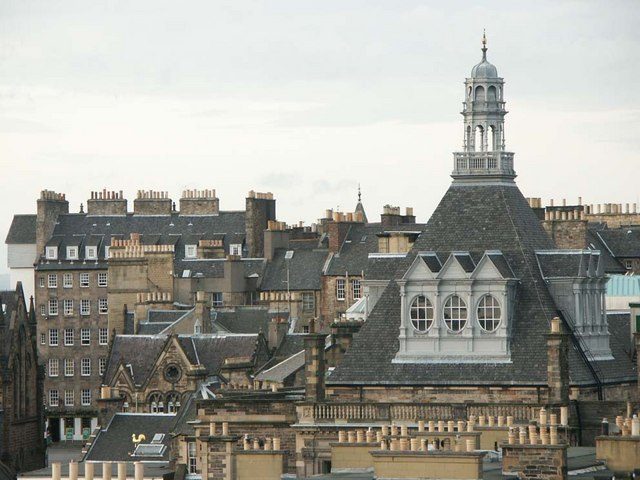
For a first visit, stay in the New Town or the quieter eastern end of the Old Town: both put you within a ten-minute walk of Waverley station and the Royal Mile without putting you above a nightclub. If you want value and calm, Bruntsfield, Marchmont or Newington are a 20-minute walk out and considerably cheaper.
Edinburgh areas at a glance
| Area | Walk to the Royal Mile | Night noise | Rough price vs city average | Best for |
|---|---|---|---|---|
| Old Town (Cowgate, Grassmarket) | 2–10 min | Severe until 3am | High | Nightlife, short stays, deep sleepers |
| Old Town (Canongate, Holyrood end) | 0–10 min | Moderate | High | First-timers who want central and quiet-ish |
| New Town | 10–15 min | Low | High | Most first visits, couples, flat walking |
| West End & Haymarket | 20–25 min | Low | Medium | Tram and train arrivals, day-trippers |
| Bruntsfield, Marchmont, Tollcross | 15–25 min | Low | Medium–low | Value, families, longer stays |
| Newington & the Southside | 15–20 min | Low–moderate | Low | Budget, Arthur’s Seat, guesthouses |
| Stockbridge & Dean Village | 25–30 min | Very low | Medium–high | Slow trips, repeat visitors |
| Leith & The Shore | 40 min walk, 25 min bus | Low | Low–medium | Food, value, second visits |
| Portobello | 25–30 min by bus | Very low | Low | Families, sea air, summer |
Everything below expands on that table. For the wider view — what to see, how many days you need, how the city fits into a longer trip — our complete Edinburgh travel guide is the place to start, and this page is the accommodation chapter of it.
Pick your priority first, then your postcode
You have four levers and you can pull about two of them properly. Decide which two matter and the map sorts itself out in ninety seconds.
If you’re optimising for arrival logistics
Stay within a ten-minute flat walk of Waverley, or within sight of a tram stop: the eastern New Town around St Andrew Square and York Place, the streets immediately north of Princes Street, or the West End near Shandwick Place. Edinburgh is built on ridges and gullies, and “800 metres from the station” can mean 800 flat metres or 800 metres with sixty steps in the middle.
If you’re optimising for sleep
Go north or south. The New Town, Stockbridge, Bruntsfield, Marchmont and Newington are residential in a way the Old Town simply isn’t. Nobody has ever fallen out of a bar onto Abercromby Place at 3am. If you must be in the Old Town, get onto the Canongate half, below St Giles and heading towards Holyrood, and ask for a room at the back.
If you’re optimising for price
Move 20 minutes out and take the bus. The saving between a central room and an equivalent one in Newington, Marchmont or Leith is real money — often a third off, sometimes half in August. Lothian’s network is genuinely good: an adult single was around £2.20 and a day ticket around £5.50 at the time of writing, so budget roughly £12 a day for two and compare that to the nightly saving.
If you’re optimising for atmosphere
Then yes, the Old Town, and I understand entirely. Waking up on a close off the Royal Mile with mist in the gullies is one of the reasons people come. Just go in with your eyes open, pack earplugs, and read the noise section below first. Atmosphere and sleep are the two levers that fight hardest here.

Arrival logistics: the bit that decides your first two hours
Nobody writes about this and everybody needs it. You will arrive tired, probably in the rain, probably with a case. Where you land dictates which areas are easy and which are a slog.
Arriving at Waverley
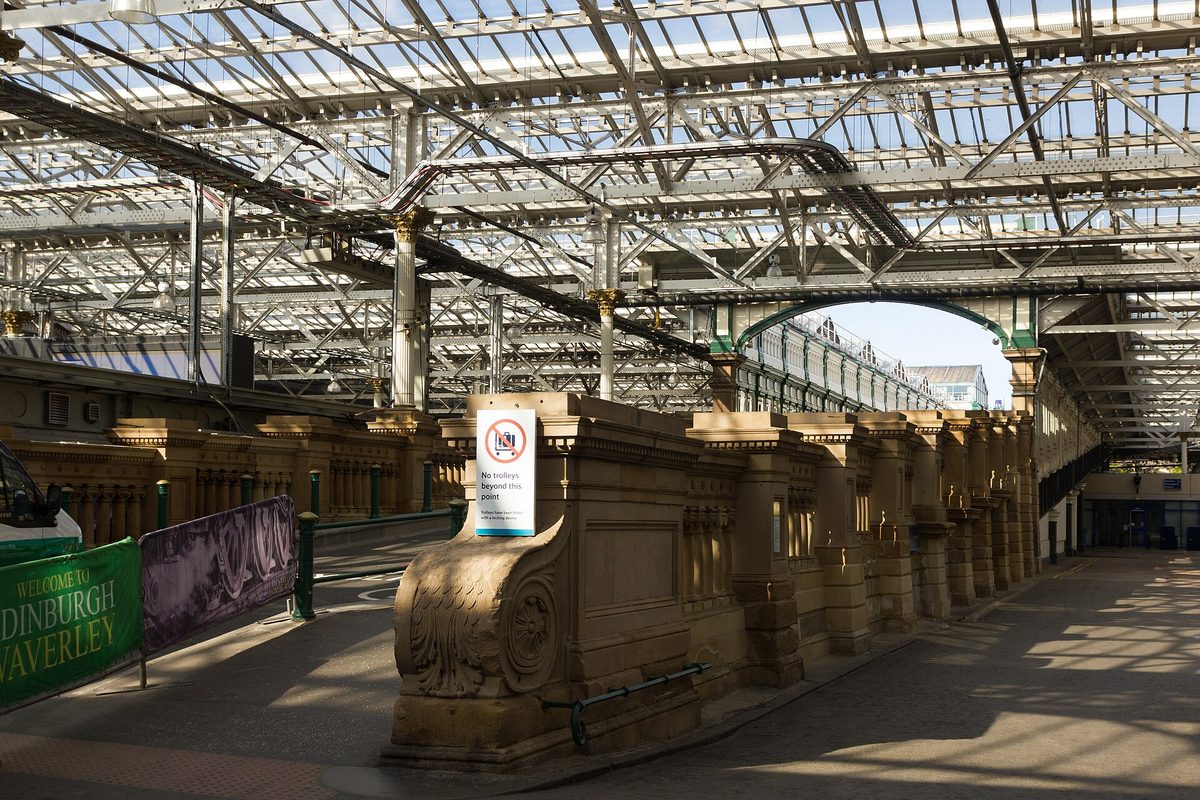
Waverley sits in the valley between the Old Town and the New Town, which means every exit involves going uphill. The Market Street exit puts you at the bottom of the Old Town: five minutes up Cockburn Street to the Royal Mile, though it’s a proper climb. The Princes Street exit takes you up the Waverley Steps, which have escalators and a lift when they’re working, and from there the New Town is flat in every direction.
Rough walking times from Waverley with luggage: New Town around George Street, 10 minutes and level. Royal Mile at St Giles, 8 minutes uphill. Grassmarket, 15. Tollcross, 20. Newington, 20. Bruntsfield, 25. Stockbridge, 25 downhill going and a solid climb coming back. Leith, 40 minutes on foot, which nobody does with a case.
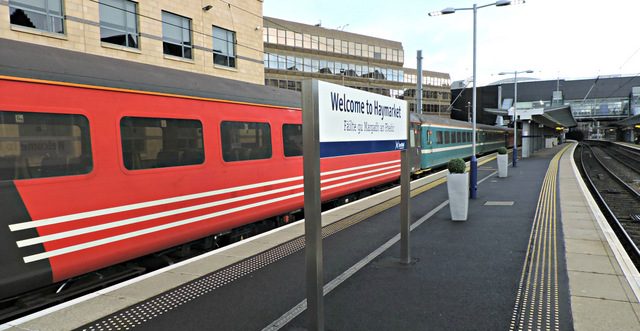
Arriving at Haymarket
Haymarket is the city’s second mainline station, and many trains from Glasgow, the west and the north stop there before or instead of Waverley. Staying in the West End, Tollcross, Bruntsfield or along the Lothian Road corridor? Get off at Haymarket and save yourself twenty minutes and a hill.
Staying in the Old Town? Don’t. It’s about 25 minutes on foot from Haymarket to the Royal Mile and the last stretch is uphill. Stay on the train to Waverley — it’s four minutes.
Arriving at the airport, and what the tram actually covers
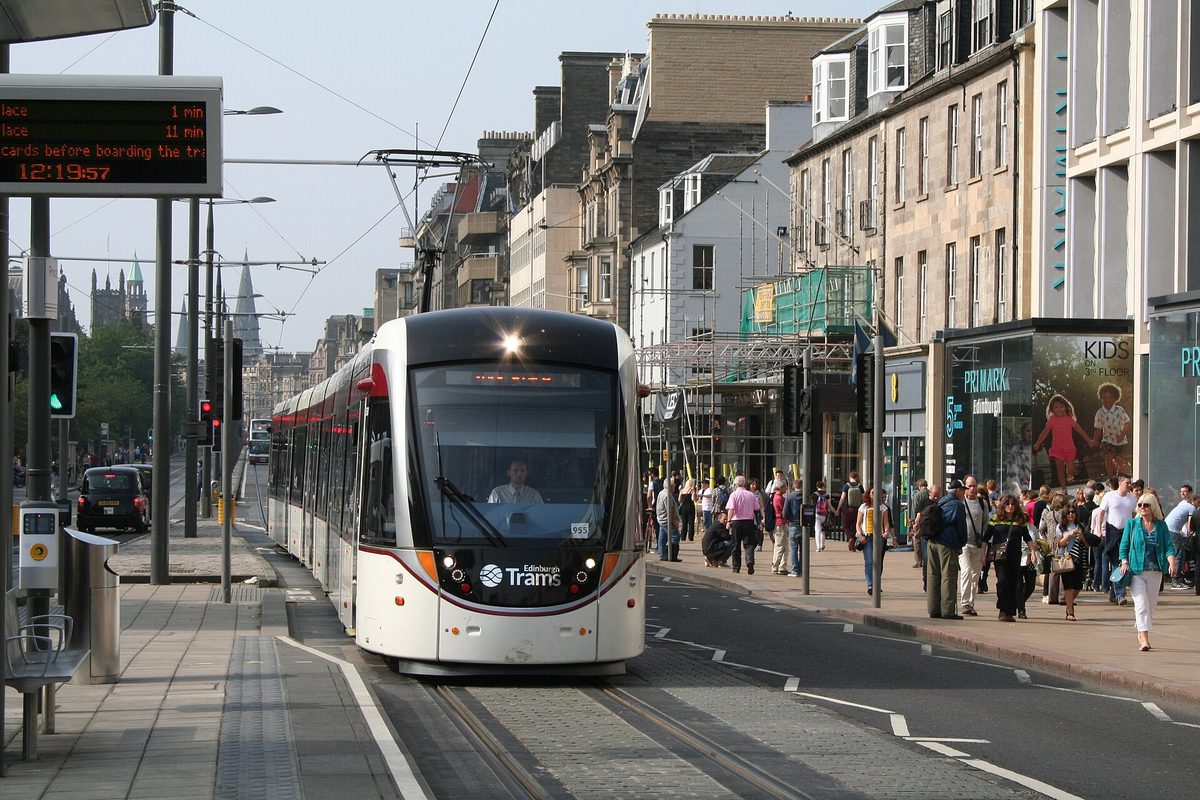
This is the single most misunderstood thing about Edinburgh transport. The tram is excellent, and it serves precisely one corridor: airport, Ingliston, Edinburgh Park, Murrayfield, Haymarket, Princes Street, St Andrew Square and Picardy Place, then down Leith Walk to Ocean Terminal and Newhaven. That is the whole network. One line.
So it’s brilliant for the West End, Princes Street, the eastern New Town and Leith, and no use whatsoever for Bruntsfield, Marchmont, Newington, Stockbridge or Portobello — for those you want the Airlink 100 bus, a taxi, or a tram plus a second leg.
Airport to the city centre is a little under 35 minutes; airport to Princes Street is quoted at around 38, and the full run to Newhaven closer to 55. Trams go roughly every seven minutes through the day, first out of the airport around 05:34 and last around 23:44 — so a very late flight means a bus or a cab regardless. Waverley isn’t on the line, but it’s a short walk from the St Andrew Square stop.
One live caveat: at the time of writing in August 2026, part of Princes Street is closed following a serious fire in the former Debenhams building in July, and trams have been running only between the airport and the West End, with nothing continuing to Leith and Newhaven. That may well be resolved by the time you read this. Check Edinburgh Trams and Lothian Buses before you build a plan around either.
Arriving late, with luggage
If you get in after 10pm, book somewhere you can reach without changing vehicles. Night buses run, but a Lothian day ticket isn’t valid on them and you’ll need a separate fare — and cobbled closes with wheeled cases at midnight are a special kind of misery. This is the one scenario where paying £30 more for a room near the station is unambiguously worth it.
The two things nobody puts in writing: noise and stairs
These are the two most common regrets I hear, and I have never once seen a ranking page state either of them plainly. So here they are.
The Cowgate and the Grassmarket at 3am
The Cowgate is a narrow canyon running below South Bridge, lined with late bars and clubs, and it is loud. Not lively — loud. Sound bounces off the tenement walls and travels straight up. The Grassmarket, one street over and prettier, empties its pubs onto the pavement and those people then walk home past your window. This is not a weekend problem. It’s Tuesday too.
August is considerably worse. During the festival season the whole Old Town runs on a different clock, venues have late licences, and the streets around Bristo Square, the Cowgate and the Grassmarket carry a steady flow of people until dawn. I wouldn’t book an Old Town room in August without earplugs, and I wouldn’t book a street-facing one at all. If you’re a light sleeper, this single fact should probably decide your area.
What helps: ask specifically for a room facing a courtyard or the back; choose the Canongate end of the Royal Mile over the Lawnmarket end; favour hotels over flats, because they’re likelier to have modern glazing. And search recent reviews for the word “noise” rather than trusting the star rating.
Tenement stairs and the no-lift problem
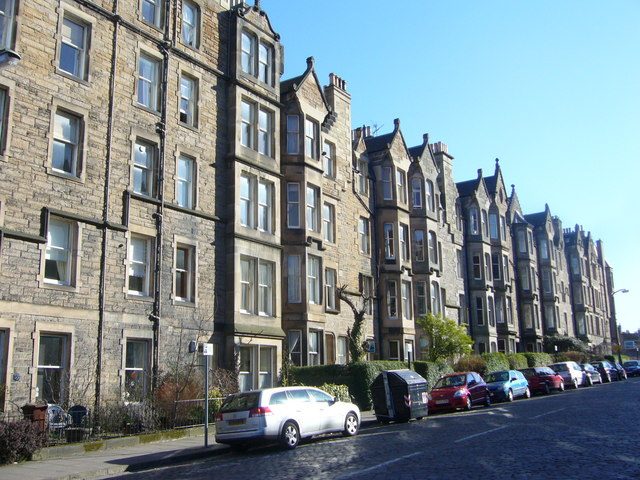
Edinburgh’s housing stock is tenements: four, five, sometimes six storeys of flats stacked above a common stone stair. In the Old Town and across huge stretches of the New Town, Marchmont, Bruntsfield and Newington, that stair is the only way up. No lift. Often no handrail worth the name. The steps are stone, worn and frequently spiral.
If you have a heavy case, a dodgy knee, a pushchair, or you simply don’t fancy hauling luggage up four floors after a flight, this decides your booking more than the view does. Flats and serviced apartments are where the risk sits; purpose-built hotels almost always have a lift, though some converted townhouse hotels don’t.
Ask the host outright: which floor, and is there a lift? They’re usually honest when asked directly, and “second floor” in Scotland means two flights above the ground floor, not one. If mobility is a real constraint, the New Town’s flat grid, the West End, Leith and Portobello are all easier ground than the Old Town.
The central areas
Old Town
The medieval spine of the city, running down the ridge from the castle to Holyrood. Everything is on your doorstep: the castle, the closes, the museums, the vaults. If you’re here for two or three days and want to fall out of bed into it all, this is the right call, and our downhill two-day route assumes exactly that.
Understand what you’re buying. Prices are the highest in the city, rooms in converted buildings are small, stairs are near-certain, and the noise problem above is real. The Old Town also splits into halves. West of St Giles — Lawnmarket, Castlehill, Victoria Street, the Grassmarket — is busiest and loudest. East of St Giles, down the Canongate towards Holyrood, is noticeably calmer, still walkable to everything, and often cheaper. For a first visit that eastern end is the sweet spot, and it puts you five minutes from the start of the Arthur’s Seat climb.
Practicalities: no useful parking, the tram is a 10-minute walk away at Princes Street, Waverley is 5–10 minutes downhill. It’s the best base for the underground vaults tours and for working through the closes along the Mile at a pace that lets you nip back to the room.
New Town
North of Princes Street, the Georgian grid: wide streets, big sash windows, ironwork, blessedly flat pavements. For most first-time visitors this is the answer I’d give if you made me pick one area. You’re 10 to 15 minutes from the Royal Mile, 10 from Waverley, on the tram line at St Andrew Square, surrounded by good restaurants, and the streets go quiet at night.
It isn’t cheap, but it’s no dearer than the Old Town and the rooms are bigger. The eastern end around York Place is the most convenient for transport and the least expensive; Charlotte Square at the western end is grandest and priciest. One thing to watch: the ground drops sharply north of Queen Street, so a New Town address on Royal Circus means a stiff climb back at the end of the day.
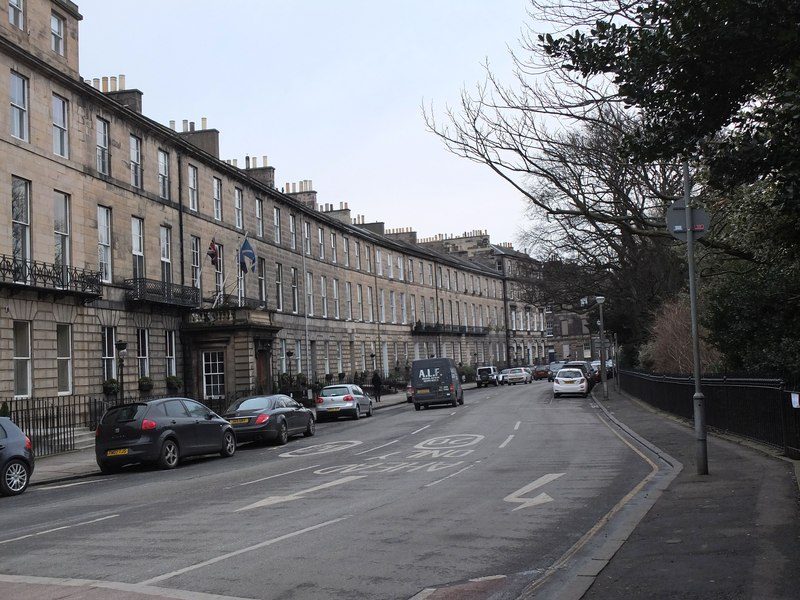
West End and Haymarket
West of Lothian Road, where Georgian terraces meet office blocks. It’s the most transport-efficient part of central Edinburgh: Haymarket station, a tram stop and half the city’s buses within a few streets, with prices a notch below the Old Town and New Town.
The trade-off is character. The West End proper, around Stafford Street and Rutland Square, is handsome and calm; Haymarket itself is a functional traffic junction. But if you’re doing a lot of day trips out to Stirling, Fife and the Borders, or carrying on to Glasgow afterwards, the time you save at the station adds up fast.
The areas everyone skips, and shouldn’t
This is where the guides run out of steam and where the actual value sits. These neighbourhoods are where Edinburgh people live. The cafes are for locals, the pubs have regulars, the pavements are wide, and you’ll pay meaningfully less.
Bruntsfield and Marchmont
South-west of the Old Town, past the Meadows. Bruntsfield Place is a long run of independent delis, bakeries, bookshops and decent restaurants; Marchmont behind it is rows of tall Victorian tenements facing the park. Both are 20 to 25 minutes on foot into the centre, and the diagonal walk across the Meadows on a clear morning is one of the nicer commutes in any British city.
Buses along Bruntsfield Place and Morningside Road run constantly — the 11, 16 and 23 among them, though check current numbers on the Lothian app. Accommodation is mostly guesthouses, B&Bs and flats rather than hotels, which means stairs, so ask. Expect to pay noticeably less than the centre outside August. Good for families and for stays of four nights or more.
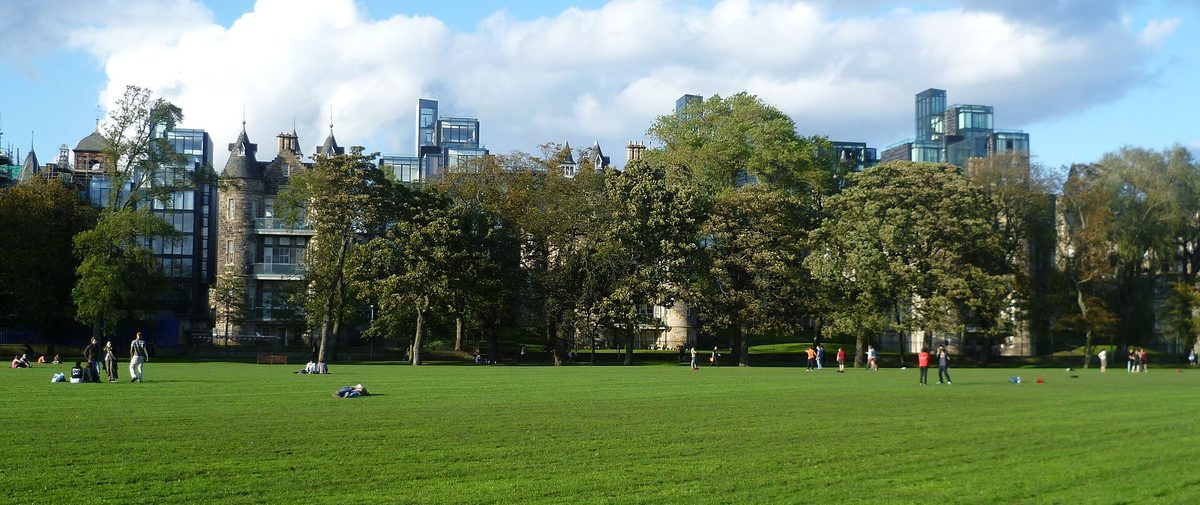
Newington and the Southside
Straight down South Bridge from the Royal Mile into the university quarter, then Newington. This is the best-value near-central area in the city, largely because it’s full of student flats and old-school guesthouses along Minto Street and Mayfield Gardens. You’re 15 to 20 minutes’ walk from the Royal Mile on relatively flat ground, and the bus corridor down Nicolson Street and Clerk Street is one of the busiest in Scotland.
It’s also closest to Holyrood Park, which matters if you want Arthur’s Seat before breakfast. Downsides: it isn’t pretty in the way Stockbridge is, and the stretch nearest the university gets noisy in term time. For a first visit on a budget, I’d still put Newington ahead of an airport hotel every time.
Tollcross
Wedged between the Grassmarket, Bruntsfield and Lothian Road, Tollcross is unglamorous and criminally underrated for location. Ten minutes from the Grassmarket, twelve from the castle, five from the King’s Theatre — and you pay West End prices rather than Old Town ones. It’s a busy junction, so ask for a back room, but as a compromise between cost and walking distance it’s hard to beat.
Stockbridge
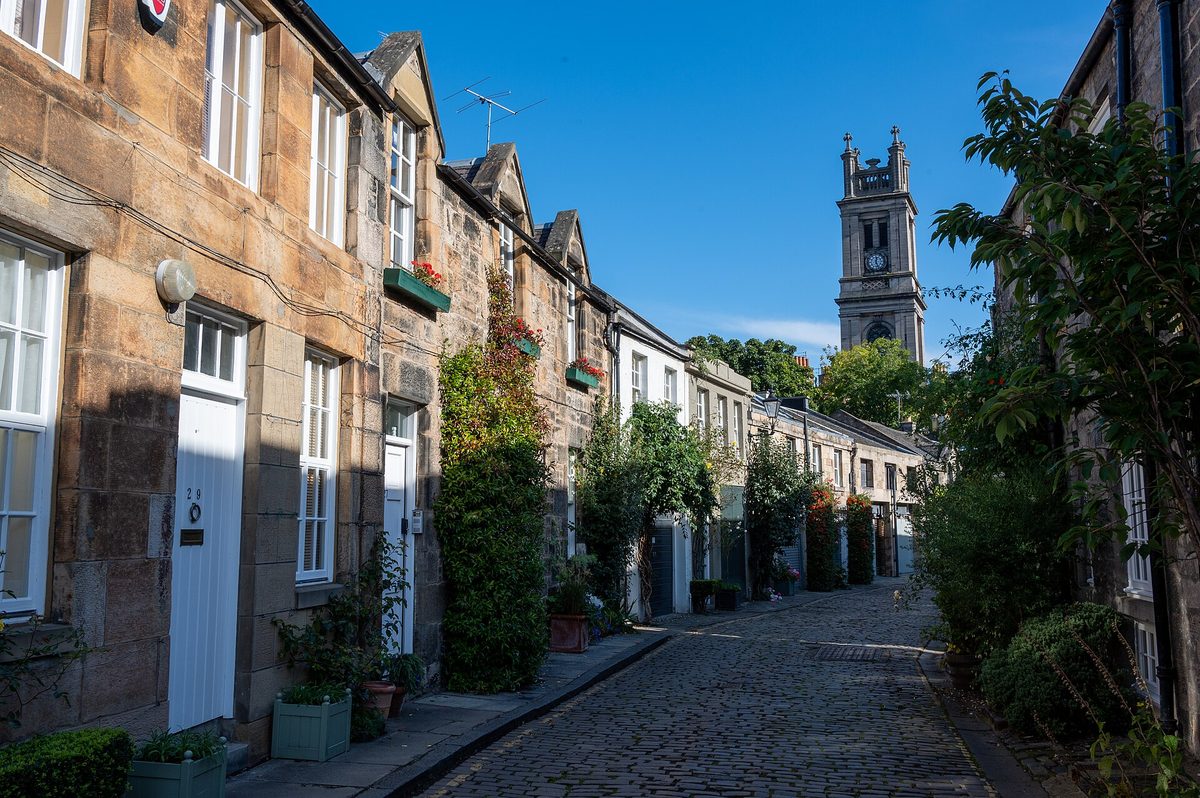
Downhill from the New Town along the Water of Leith. It reads like a village that got absorbed and never quite noticed: butchers, a Sunday market, secondhand shops, pubs with actual locals in them, and Circus Lane round the corner doing its best film-set impression. The Royal Botanic Garden is ten minutes north and free to enter.
The catch is topography. Getting into town takes 20 to 25 minutes and the return leg is uphill, every time, in whatever weather Edinburgh has decided on. Buses run frequently — the 24 among others — so it’s no hardship, but it’s a real daily cost. Rooms are few and skew upmarket. Best for repeat visitors.
Dean Village
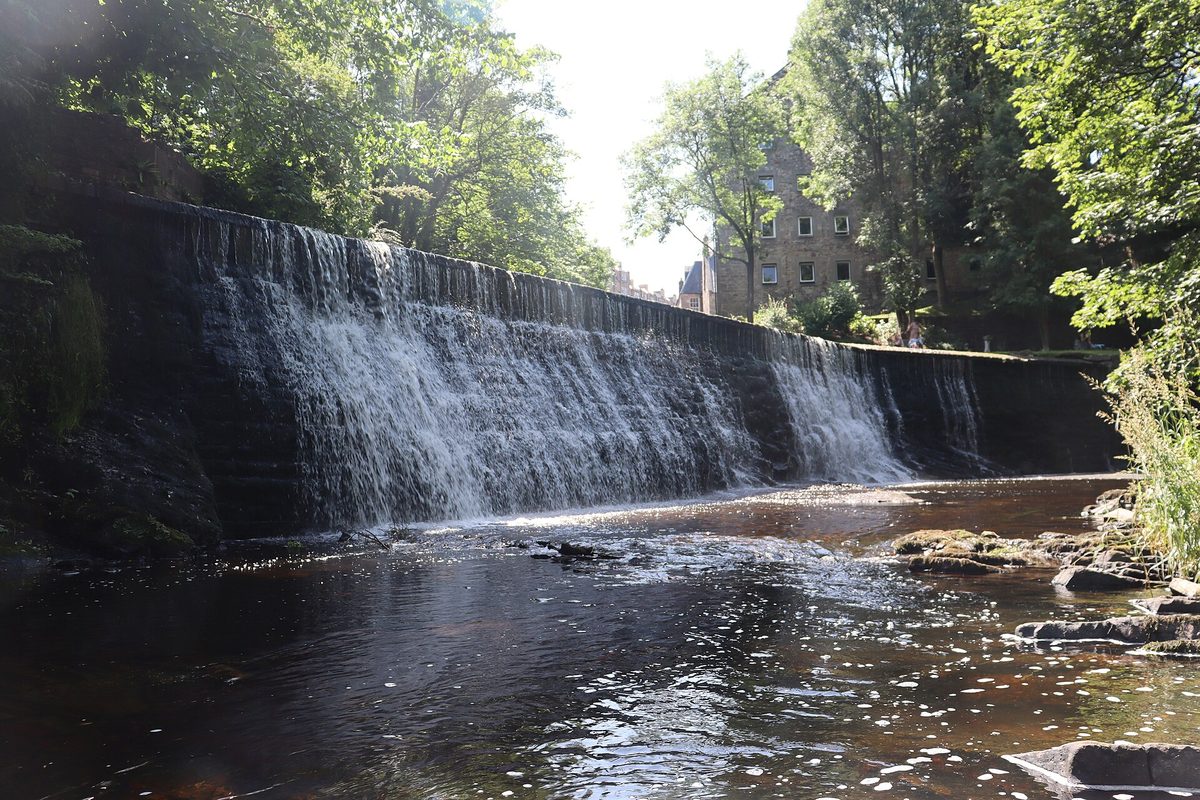
A pocket of old mill buildings in the gorge of the Water of Leith, ten to fifteen minutes west of Princes Street and about four hundred years away in atmosphere. It is very quiet and very lovely and there is almost nothing there: a handful of places to stay, no shops, no restaurants. You eat in the New Town and walk back. If that sounds restful rather than annoying, it’s a fine choice, and the riverside path towards Stockbridge is one of the best free walks in the city — there’s more in that vein in our roundup of free things to do in Edinburgh.
Portobello
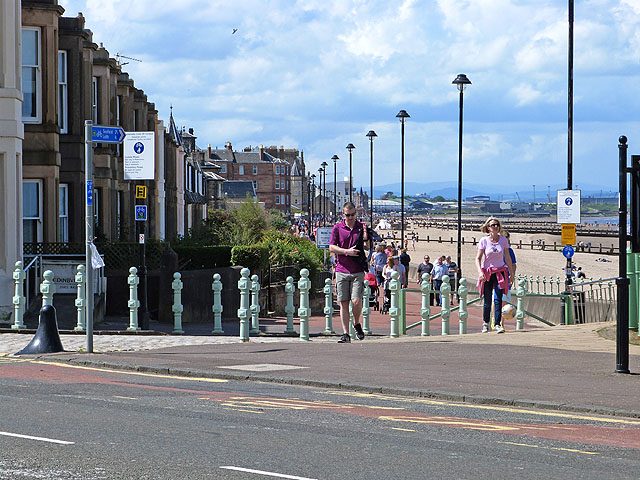
Edinburgh’s beach, about three miles east, with a Victorian promenade, a long stretch of sand and a high street full of independent shops. The 26 runs from the promenade into the centre in around 25 to 30 minutes depending on traffic — worth confirming the route on the Lothian app before you rely on it. Prices are among the lowest in the city and the flats are often bigger.
It works brilliantly for families in summer and for anyone staying a week. It works less well in February when it’s dark by four and you’re doing that bus twice a day. Judge it by season. If beaches interest you more broadly, we’ve rounded up the best beaches in Scotland elsewhere — Portobello is the urban one.
Leith: worth it, but do the maths
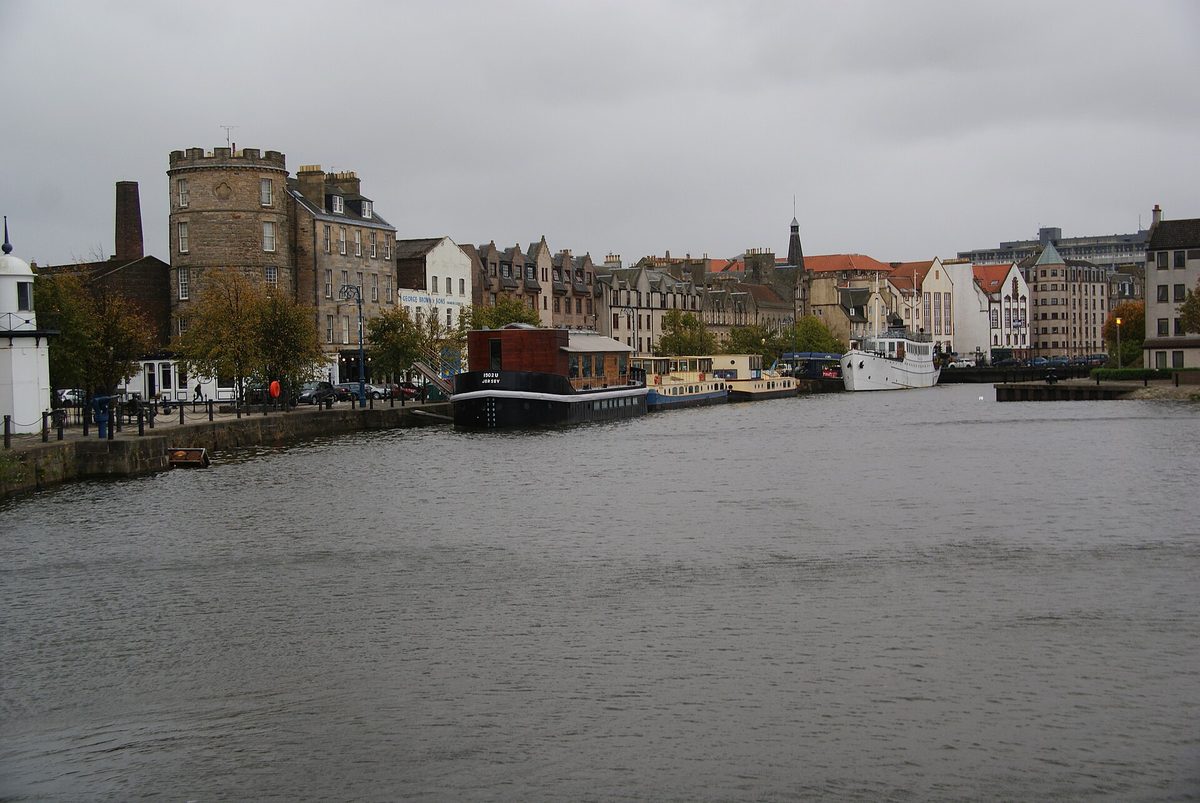
Leith deserves its own section because it’s the area people most often oversell and most often regret. The good bits are completely real: the best concentration of restaurants in the city, waterfront pubs along The Shore, two Michelin-starred kitchens, a Saturday market, and rates that undercut the centre by a solid margin. If you care about eating well, Leith is where Edinburgh does it, and it slots neatly into a wider tour of what Scotland actually eats and drinks.
Now the maths. From The Shore to the Royal Mile is roughly 25 minutes by tram or bus, plus waiting, plus the walk at either end. Call it 35 minutes door to door, each way. Over four days, going in and out twice a day — which you will, because you’ll want to drop things off — that’s something like four and a half hours of your holiday in transit. On a fortnight, fine. On a three-night first visit, a lot.
My honest position: Leith is a great second-visit base and a great long-stay base. For three nights and a first visit, stay central and come to Leith for dinner. The 22 and 36 buses run late, and the tram is quick when it’s running the full route.
Which area suits your kind of trip
Families
Bruntsfield, Marchmont and Portobello, in that order. You want space, a kitchen, a park within a hundred metres and a shop that sells milk at 8am. The Meadows and Bruntsfield Links give you playparks, pitches and room to run. Flats here are bigger and cheaper than anything central, and the bus in is straightforward with a buggy — unlike the Old Town, where closes and steps make wheels a genuine ordeal. Our guide to things to do in Scotland with kids covers the rest.
Couples
New Town for the first visit, Stockbridge or Dean Village for the second. The New Town gives you a short walk home from dinner and no 3am wake-up; Stockbridge gives you slow mornings and a river path. Either beats a castle-view room you can’t sleep in. More ideas in our list of romantic things to do in Scotland.
Solo travellers
Old Town or the Southside. The Old Town has the hostels and the highest density of places where turning up alone is normal — pub sessions, walking tours, ghost tours, all starting within a few streets. The Southside is cheaper and has the university crowd. Edinburgh is a safe city by any reasonable measure and the central areas stay busy and well lit late.
If you’re driving
Read this bit twice. Parking in central Edinburgh is expensive and largely permit-controlled, and the Old Town in particular is close to hopeless. Central pay-and-display sat somewhere around £6.80 to £9 an hour when I last checked, with controls Monday to Saturday from 8.30am to 6.30pm and on Sunday afternoons. Residents’ bays are not available to you. Hotel parking, where it exists, is often charged separately and can run to £25–£35 a night.
Practical answers: pick somewhere with genuine off-street parking — in practice the Southside, Newington, Bruntsfield or further out — or use the park-and-ride sites on the city edge. Better still, don’t bring the car in at all. Collect it the day you leave for the Highlands. The city is walkable end to end and the rest is covered in our guide to getting around Scotland.
Prices, the visitor levy and when to book
What you’ll roughly pay
I’m going to talk in multiples rather than exact figures, because Edinburgh rates move too fast for a number on a page to stay honest. January to March and November are the cheapest months by a distance. Late spring and early autumn sit in the middle. July is busy. August is its own weather system.
A central room that goes for a certain price in October will typically be half as much again in June, then two to four times that in mid-August. Hogmanay does something similar over a shorter window. If your dates are flexible, the gap between the last week of August and the first week of September is startling: the city empties, rates collapse, and the weather is often better. Our guide to the best time to visit Scotland covers the seasonal detail properly.
August and the Fringe multiple
The Edinburgh Festival Fringe ran from 7 to 31 August in 2026, and it typically starts on the first Friday of the month and runs to the final Monday — check edfringe.com for the year you’re planning. During those weeks the city’s population swells enormously and accommodation behaves accordingly. Rates commonly double, frequently triple, and central flats go higher still.
Book August accommodation by the previous November or December if you want anything decent at a sane price; by February the good central options are largely gone. If you’re coming in August and can’t face the prices, look at Portobello, Leith, Newington and out towards Corstorphine, which stay comparatively sane, and accept the commute. If the Fringe isn’t why you’re coming, come literally any other month.
The 5% visitor levy
New and worth knowing: Edinburgh introduced a visitor levy on 24 July 2026. It’s 5% of the accommodation cost, charged before VAT, applied to the first five consecutive nights, covering hotels, B&Bs, guesthouses, hostels, self-catering flats, short-term lets and campsites alike. It isn’t charged on extras like parking or meals, and stays booked and paid for before 1 October 2025 are exempt.
On a £150 room that’s about £7.50 a night, so roughly £37 across five nights — not ruinous, but budget for it. Some properties fold it into the headline rate and some add it at checkout. Details are on the City of Edinburgh Council site.
How far ahead to book
Outside August and Hogmanay, six to eight weeks is comfortable for anything except a specific property you’ve set your heart on. For August, think nine to twelve months. For Hogmanay, book by the summer. Rugby international weekends at Murrayfield also spike prices sharply and catch people out.
For accommodation types across the rest of the country — bothies, hostels, castle hotels, self-catering in the Highlands and how booking windows differ outside the cities — see our national guide to where to stay in Scotland. This page sticks deliberately to Edinburgh areas rather than property types.
Where I’d avoid on a first visit
Nothing on this list is bad. These are poor fits for a short first trip, and I’d rather say so than pretend every option is equal.
Airport hotels. The airport is around seven miles out and the tram takes over half an hour each way. That’s an hour of your day, every day, plus the inability to nip back for a coat. They’re cheaper, and in the depths of August that can decide it, but treat it as a last resort. If you have a 6am flight out, book the airport for the final night only.
Directly on Princes Street. Superb views of the castle, and a bus and tram artery past your window with crowds on the pavement from eight in the morning. Great for one night, wearing after three.
Right on the Cowgate. Covered above. Unless you’re out until 3am yourself, in which case, fair enough.
The far western suburbs. Corstorphine, Sighthill and the areas past Murrayfield are pleasant and often good value, but you’re committing to a 30-minute journey each way with little within walking distance.
Anywhere you haven’t checked the floor and the lift. Not a place, but the most consequential mistake on this page.
Frequently asked questions
What is the best area to stay in Edinburgh for a first visit?
The New Town, or the Canongate end of the Old Town. Both are within a ten-minute walk of Waverley and the Royal Mile, both have plenty of places to eat, and neither sits directly above late-night bars. The New Town has flatter streets and slightly larger rooms; the Old Town has more atmosphere and more noise.
Is it better to stay in Edinburgh Old Town or New Town?
Old Town for atmosphere and the shortest walk to the castle and the closes; New Town for sleep, flat pavements, bigger rooms and easier tram access. Prices are broadly similar. If you’re a light sleeper or coming in August, choose the New Town. If you’re here for two nights and want to be in the thick of it, choose the Old Town.
Is Leith a good place to stay in Edinburgh?
Yes, with a caveat. The food and the value are genuinely excellent and the waterfront is lovely. But it’s roughly 25 minutes by tram or bus from the Old Town, which becomes 35 minutes door to door and adds up over a short trip. Ideal for a second visit or a week-plus stay; less ideal for three nights.
How much does accommodation cost in Edinburgh?
It swings hard by season. Winter and early spring are cheapest, late spring and early autumn sit in the middle, and August can be two to four times the shoulder-season rate. Add 5% for the visitor levy on the first five nights. Staying 20 minutes out in Newington, Marchmont or Leith typically saves a third.
Do I need to book Edinburgh accommodation far in advance?
For August, yes — nine to twelve months ahead, and certainly by the previous February. For Hogmanay, book by summer. For everything else, six to eight weeks is comfortable, though a specific property or a rugby weekend at Murrayfield will need longer.
Is Edinburgh walkable, or do I need public transport?
Central Edinburgh is very walkable — you can cross the Old Town and New Town on foot in half an hour. It’s also steep in places, with a lot of steps between levels. Beyond about a mile out, or with any mobility concerns, Lothian’s buses are frequent, cheap and easy to use with contactless.
Where should I stay in Edinburgh if I have a car?
Somewhere with confirmed off-street parking, which in practice means the Southside, Newington, Bruntsfield or the outer suburbs. Central pay-and-display runs to several pounds an hour and much of the Old Town is permit-controlled. Honestly, the better answer is to leave the car outside the city and collect it when you head north.
Is Edinburgh safe to walk around at night?
Broadly yes. The central areas are busy and well lit into the small hours, and ordinary city-centre sense is all that’s required. The Old Town gets rowdy rather than threatening at closing time. As anywhere, quiet industrial edges and empty parks after dark are best avoided.
Final thoughts
If I were booking tomorrow for three nights, I’d take a back-facing room in the New Town near St Andrew Square, walk everywhere, and get the tram straight to the airport at the end. If I had a week, I’d take a flat in Marchmont, cross the Meadows every morning, and spend what I saved on dinner in Leith.
What I wouldn’t do is book on the strength of a photograph. Check the floor. Check the lift. Check which way the windows face. Then go and enjoy a city that’s worth the stairs — and when you’re ready to plan the rest, our Edinburgh guide and our wider Scotland itinerary ideas pick up where this leaves off.
Base yourself well and you can walk to dinner. Our guide to Edinburgh food tours covers the neighbourhoods each operator works, which is a useful sanity check before you book a hotel miles from any of them.
Most people pair Edinburgh with one Highland base rather than touring the country town by town. If you are still working out the shape of the trip, our first-timer’s base plan gives you three blueprints with night splits and drive times. For something smaller and more personal than a city hotel, look at B&Bs and guesthouses.
About the author: This guide was written and is maintained by the ScotlandTourism.org editorial team — travel writers who’ve spent years exploring Scotland’s cities, Highlands and islands, from bagging Munros to chasing the perfect dram. We update our guides regularly to keep prices, opening details and advice current.
Last updated: August 2026. Prices and opening times change — always check the official site before you travel.
Photo credits
All images are used under their respective Creative Commons or public-domain licenses:
- Edinburgh Old Town rooftops and spires seen from above — Simon Johnston, CC BY-SA 2.0, via Wikimedia Commons
- Pubs and bars lining the Grassmarket in Edinburgh Old Town — Kalisa66, CC0, via Wikimedia Commons
- Haymarket station in Edinburgh’s West End — Thomas Nugent, CC BY-SA 2.0, via Wikimedia Commons
- An Edinburgh tram on Princes Street — Dr Neil Clifton, CC BY-SA 2.0, via Wikimedia Commons
- Victorian tenement flats in Marchmont — kim traynor, CC BY-SA 2.0, via Wikimedia Commons
- Georgian terraces in Edinburgh New Town — Jim Barton, CC BY-SA 2.0, via Wikimedia Commons
- The Meadows park in Edinburgh — kim traynor, CC BY-SA 2.0, via Wikimedia Commons
- Circus Lane in Stockbridge — Ralf Steinberger from Milan, Berlin + Munich, Italy + Germany, CC BY 2.0, via Wikimedia Commons
- Dean Village on the Water of Leith — Mike Shaw, CC BY-SA 4.0, via Wikimedia Commons
- Portobello promenade and beach in Edinburgh — Oliver Dixon, CC BY-SA 2.0, via Wikimedia Commons
- The Shore in Leith — Bill Boaden, CC BY-SA 2.0, via Wikimedia Commons
- Edinburgh Waverley station — Liberaler Humanist, CC BY-SA 3.0, via Wikimedia Commons


1 note from readers