Driving the length of the loch can be a letdown. You come for the Loch Ness monster, or at least for the water that made her famous, and for most of the 35 miles of A82 between Inverness and Fort Augustus what you actually see is spruce plantation, a stone wall, and the back end of a tour coach. The loch appears in flashes between trees, like a film with half the frames missing.
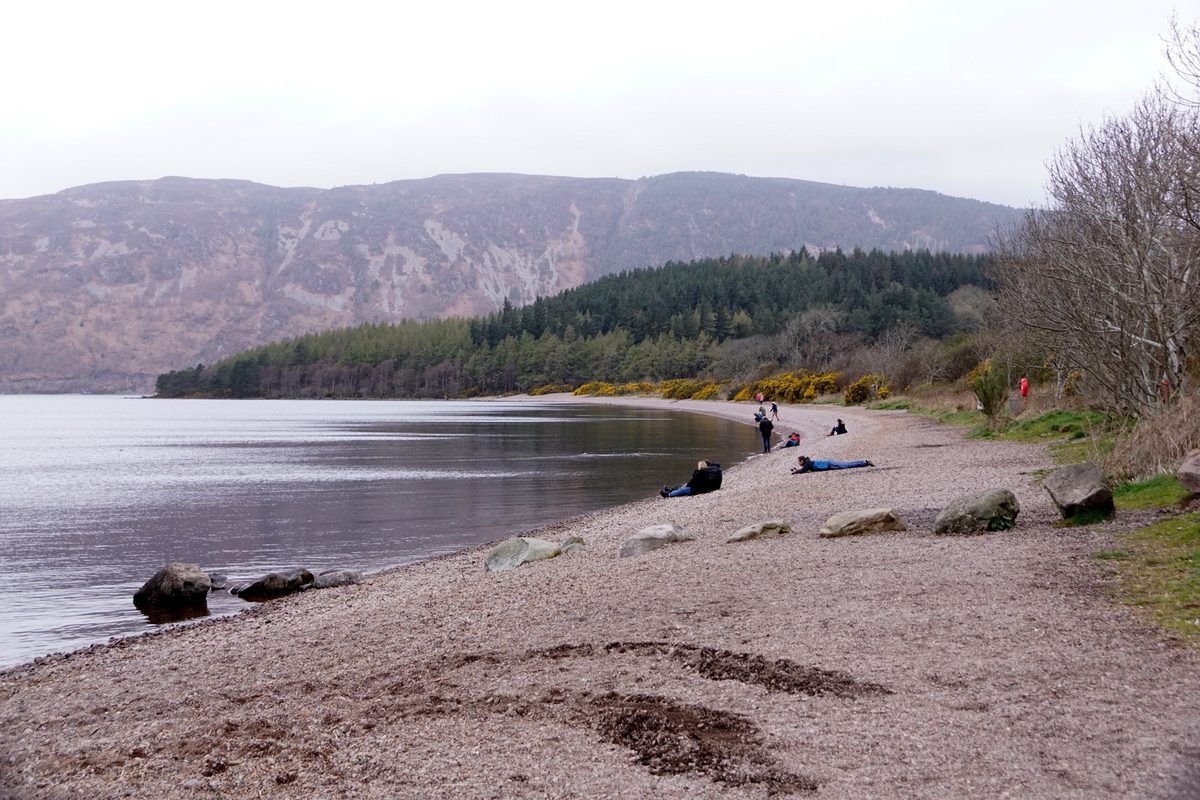
Take the little B862 instead, 15 minutes out of Inverness, park at Dores and walk onto a beach of grey shingle. From there the loch runs away from you in a dead straight line until it disappears into haze. Flat calm, black water, no far shore worth speaking of. Stand there a while and the whole legend starts to make sense.
Is the Loch Ness monster real?
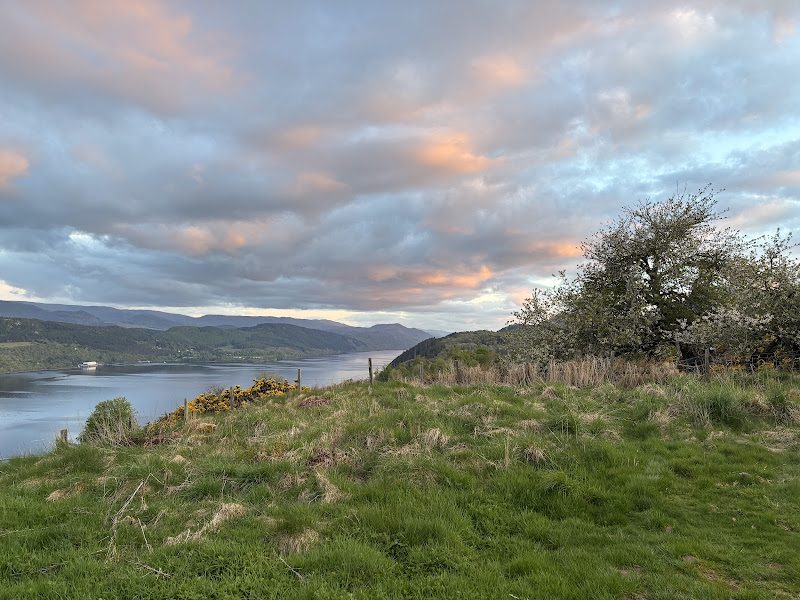
Almost certainly not, in the sense people mean. Ninety years of sonar sweeps, submersibles and a 2018 environmental DNA survey have produced no conclusive evidence of a large unknown animal, only some sonar contacts that remain ambiguous. What the DNA survey did find was an unusual quantity of eel. The honest answer is that Loch Ness holds fish, otters, deer, boat wakes and very strange light — and no monster.
That answer disappoints roughly nobody, in my experience. People do not travel to Loch Ness expecting a plesiosaur. They come because the story is genuinely good, because the loch is a serious piece of landscape in its own right, and because standing at the edge of water you cannot see a metre into does something to the imagination that no amount of debunking undoes. This guide gives you the history straight, then tells you where you can actually get to the water — which, on this particular loch, is a much harder question than it sounds. For the wider area, our guide to Loch Ness and Inverness covers where to stay and how to fit the whole Great Glen together.
Loch Ness viewpoints at a glance
| Spot | Side of the loch | From Inverness | What you actually get | Cost |
|---|---|---|---|---|
| Dores Beach | East (B862) | 15 min / 8 miles | Open shingle beach, a long view down the loch | Free |
| Urquhart Castle | West (A82) | 16 miles | Ruins on a promontory, shore path to the water | £14 adult online, £16 in person |
| Loch Ness Centre, Drumnadrochit | West (A82) | About 30 min | The science and the hoaxes, indoors | £15.75 adult online |
| Fort Augustus locks | South-west end | About an hour | Canal staircase, boats, the loch head | Free |
| Falls of Foyers | East (B852) | Further on, beyond Dores | Waterfall gorge, path down to the shore | Free |
| Suidhe Viewpoint | East (B862) | Further on, beyond Dores | High moorland panorama, roadside parking | Free |
| Loch cruise | Inverness or Fort Augustus | On the water | Sonar, depth, the scale of the thing | From around £20 |
The loch itself, and why the story sticks to it
Before any of the sightings, you need the physical facts. They are the reason a myth that would sound daft attached to almost any other body of water sounds oddly reasonable attached to this one.
The numbers
Loch Ness is about 23 miles long and no more than about 1.7 miles wide. Its deepest point is around 230 metres — deep enough to stand the Blackpool Tower on the bottom and still have well over 60 metres of water above the flagpole. It holds roughly 7.4 billion cubic metres of fresh water, which is more than every lake in England and Wales put together, with room left over.
Only Loch Morar, over on the west coast, goes deeper in Scotland. And because that volume of water carries so much stored heat, Loch Ness is not known to freeze over. On a still January morning you will sometimes see it steaming.
Water you cannot see into
Here is the fact that matters most and that the encyclopaedia entries always bury. The peat washing off the surrounding hills keeps a permanent suspension of fine dark particles in the water. Underwater visibility is somewhere around a metre on a good day, and often less. Divers describe it as working by torchlight in cold tea.
That is why every sonar expedition has been necessary in the first place. You cannot simply look. It is also why a hump seen at 400 metres in flat light stays a hump forever — there is no second glance available, no way to check. The loch is very good at not answering questions.
A trench, not a bowl
Loch Ness sits in the Great Glen, the fault line that slices Scotland diagonally from Inverness to Fort William. Glaciers ground the fault out into a steep-sided trough, which is why the bed drops away so fast from the shore and why the loch is so uniformly deep for most of its length. There is no gentle shelving, no shallows to speak of. It also makes the loch an efficient wind tunnel, which becomes relevant later. If you like this sort of landscape, it is worth reading how Loch Ness compares with the rest of the country in our roundup of Scotland’s most beautiful lochs.
A proper history of the Loch Ness monster
Most retellings compress this into three paragraphs: a saint, a photograph, a hoax. The real chronology is more interesting than that, and a couple of the standard claims fall apart the moment you look at them properly.
565 AD: the saint and the river
The origin story everyone cites is from Adomnán’s Life of St Columba, written around 700 AD about events supposedly a century and a half earlier. Columba comes upon Pictish locals burying a man mauled by a water beast. He sends a follower to swim across; the beast surfaces; Columba makes the sign of the cross and orders it back, and it retreats.
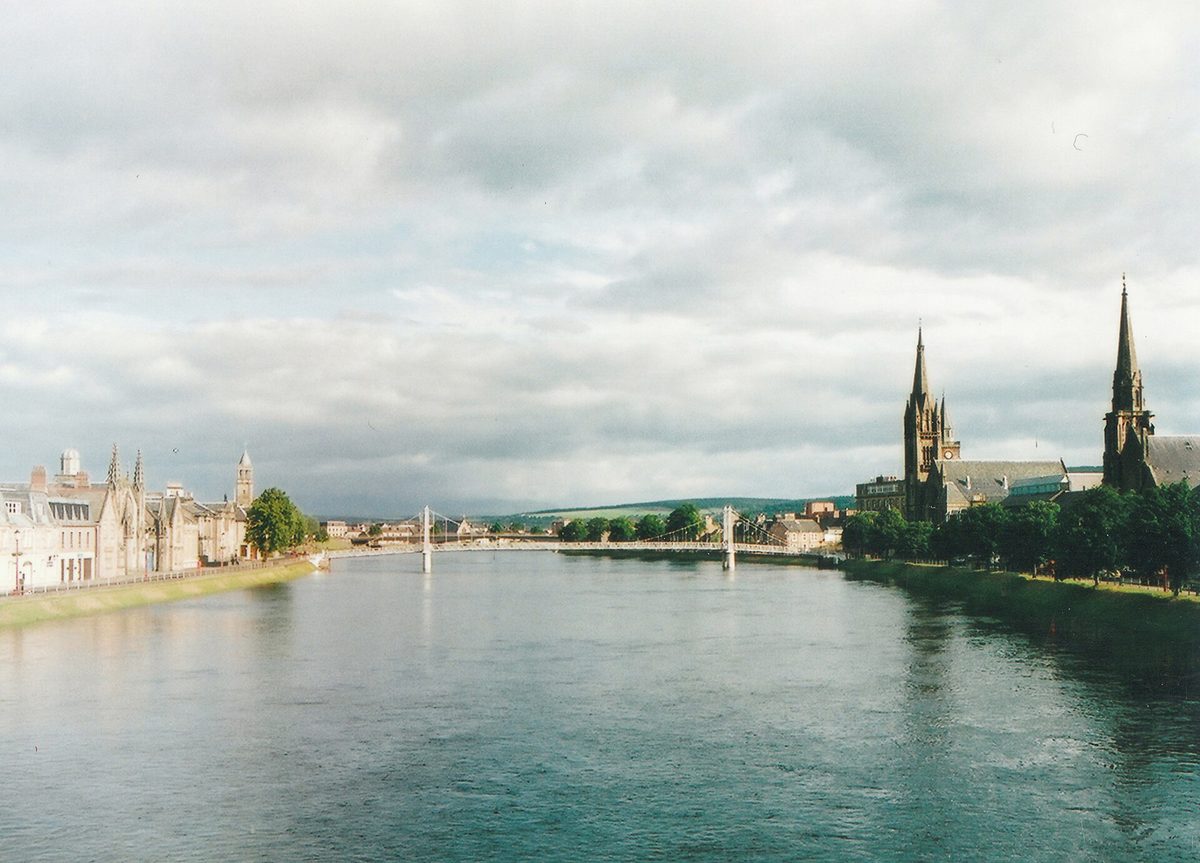
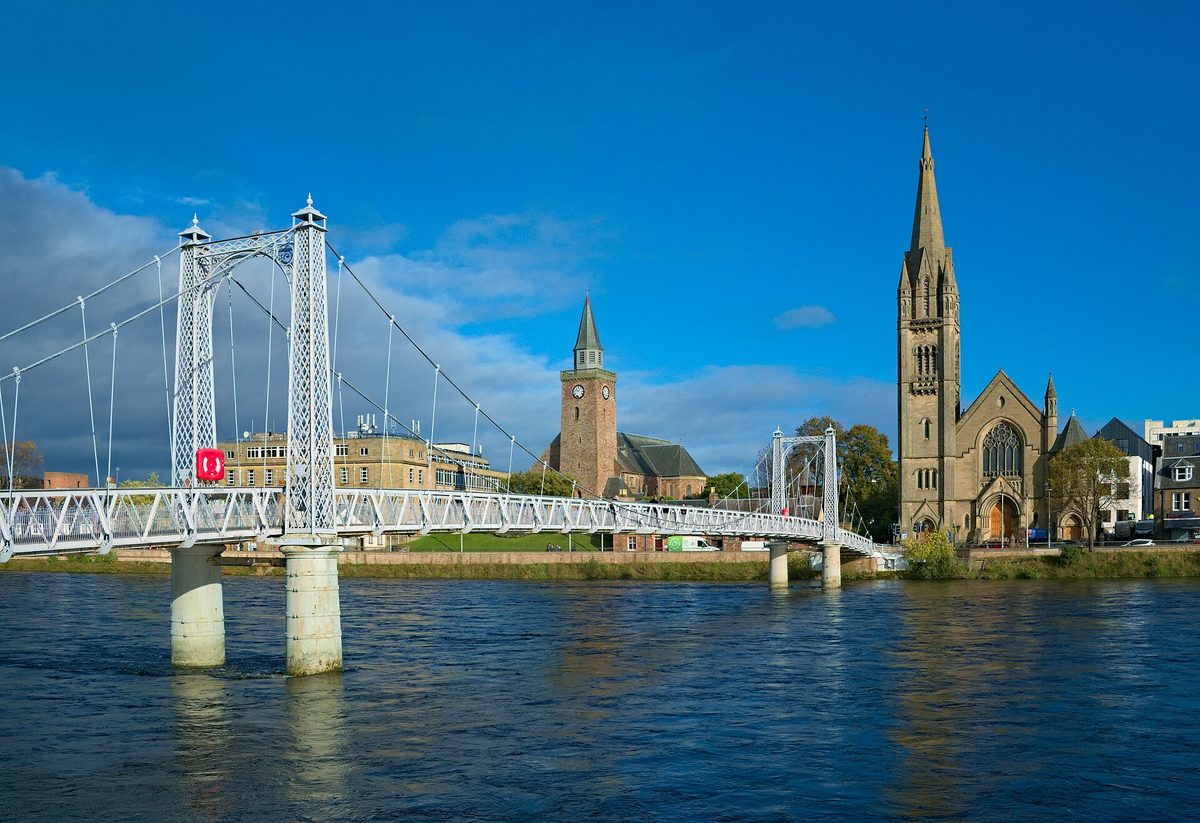
Here is what almost nobody mentions. The episode takes place in the River Ness, not the loch. That is a short, fast, shallow river running through what is now the centre of Inverness — you can walk its banks in half an hour today, past the cathedral and the Ness Islands. Water-beast stories were standard hagiography furniture, the saintly equivalent of a driving test, and there is no reference to anything in the loch itself.
So Columba is a lovely story and a bad piece of evidence. Between then and the 1930s there are perhaps a couple of dozen scattered reports, mostly folkloric kelpie and water-horse tales that belong to a Highland tradition found at dozens of lochs. Loch Morar has Morag. The stories are about drowning, not zoology.
1933: a road upgrade changes everything
This is the part I find genuinely fascinating, and it explains the whole phenomenon better than any cryptozoology.
Until the early 1930s, the road along the north-west shore was a narrow track largely screened by mature woodland. In the early 1930s that road was upgraded into today’s A82, with trees cleared and rock blasted out along the shore. For the first time, thousands of people in cars had an open, elevated, sustained view over the surface of Loch Ness. Roughly the same year the loch became visible, it acquired a monster.
On 2 May 1933 the Inverness Courier ran a report of a sighting by Aldie Mackay, who managed the Drumnadrochit Hotel, and her husband John. They described something enormous rolling and plunging in the water. The piece was written up by a local water bailiff, Alex Campbell, and the paper’s editor Evan Barron is credited with the decision that made everything else happen: whatever it was, if it was that size, it was not a creature. It was a monster.
The word did the rest. In July that year a London couple, George Spicer and his wife, reported a large-bodied, long-necked animal crossing the road in front of their car near Dores. By the winter the national press had arrived, one paper had hired a big-game hunter, and Loch Ness had a permanent tenant.
The Surgeon’s Photograph, and the sixty-year lie
The image everyone has in their head — a slim neck and small head rising from ripples, apparently at a distance — was published in the Daily Mail on 21 April 1934 and credited to Robert Kenneth Wilson, a London gynaecologist. That professional respectability was the point. A doctor would not lie.
The unravelling took sixty years. The big-game hunter, Marmaduke Wetherell, had been publicly humiliated in January 1934, when the tracks he had found on the shore the previous December were identified as hippopotamus prints, made with a hippo-foot umbrella stand. In 1991 his stepson, Christian Spurling, admitted the hoax: he had built the neck and head out of plastic wood and mounted it on a toy submarine bought from Woolworths. It was, at most, about a foot tall.
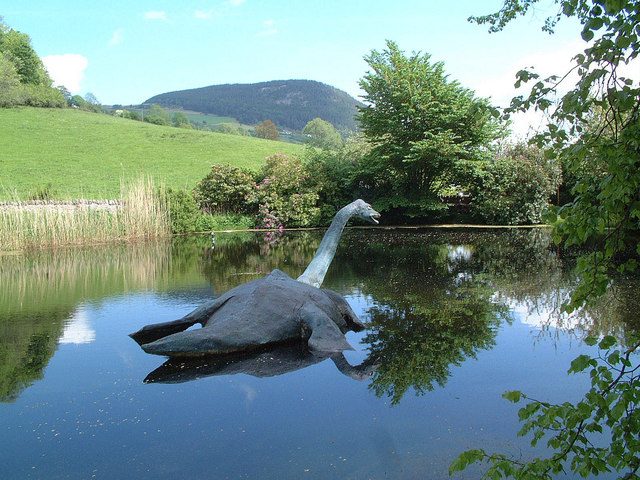
Two things follow from that, and I would hold both. The first is that the most famous piece of evidence for the Loch Ness monster is a model head and neck on a toy submarine, and it looked convincing for so long partly because the picture was cropped, which made a small model look like a large animal. The second is that this is a wonderful story about revenge, journalism and gullibility, and it is a large part of why the loch is worth visiting at all.
The film era: Dinsdale and the Bureau
In April 1960 an aeronautical engineer named Tim Dinsdale shot roughly four minutes of film of a dark hump moving across the loch. It was taken seriously enough that a Ministry of Defence photographic interpretation unit examined it and concluded the object was probably animate. Sceptics have since argued convincingly that it is a boat. Dinsdale spent much of the rest of his life on the loch.
His film helped launch the Loch Ness Phenomena Investigation Bureau, which from 1962 to 1972 ran camera platforms and volunteer watch rotas along the shore each summer. Ten years of organised, disciplined, well-intentioned watching produced nothing that survived scrutiny. In the 1970s the American patent lawyer Robert Rines added underwater strobe photography and produced the famous “flipper” images, which later turned out to have been substantially retouched between the raw frames and publication.
Operation Deepscan, 1987
The most extensive search of its time took place over two days in October 1987. Twenty-four small boats, each with an echo sounder, moved down the loch in a line abreast, sweeping it like a curtain. It was co-ordinated by Adrian Shine of the Loch Ness Project, who has spent decades on this water and is notably unsentimental about it.
Deepscan returned three sonar contacts that were never satisfactorily explained — mid-water targets, larger than expected, at depth. Not a monster; not nothing either. A BBC-funded survey in 2003 using several hundred sonar beams and satellite tracking swept the loch again and found no large animal at all.
2018: the DNA survey, and the eel
The modern work that matters here is the environmental DNA study led by Professor Neil Gemmell of the University of Otago, which sampled the loch in June 2018 and announced its results in September 2019. Everything living sheds cells; the team filtered water from across the loch at multiple depths and sequenced whatever DNA was in it.
The results were clean. No reptile DNA, so no plesiosaur. No shark, no sturgeon, no catfish. But there was European eel DNA in essentially every sample, at high abundance — enough that Gemmell floated the possibility that sightings could involve an unusually large eel. This is the “giant eel hypothesis”, and it is worth being precise about what it is: not a claim that giant eels exist in Loch Ness. The DNA shows that eels are there in numbers, but it cannot tell you how big any of them are, and not finding an animal’s DNA does not rule out every rare visitor. A subsequent analysis of eel catch data suggested the odds of one reaching monster proportions are vanishingly small.
2023: The Quest
In late August 2023 the Loch Ness Centre and the volunteer group Loch Ness Exploration ran a weekend search billed as the largest since the 1970s. Thermal-imaging drones, hydrophones dropped into the deep water, hundreds of registered volunteers on the shore and thousands more watching by webcam from home.
What came back was four unexplained noises on a hydrophone and no images of anything. It was, honestly, a well-executed piece of publicity as much as a survey — but it also drew in real volunteers doing real observation, and the organisers were straight about the outcome. That is more than the 1930s press managed.
What people are actually seeing
The official sightings register still logs new reports every year, usually somewhere between a handful and a dozen or so accepted entries. These are not, in the main, hoaxers. They are people who saw something they could not account for. Here is what the loch does.
Wakes, standing waves and seiches
A 23-mile trench aligned with the prevailing south-westerly wind is a machine for producing odd water. Boat wakes travel enormous distances here and can arrive minutes after the boat has gone out of sight, then rebound off the steep sides and cross each other. The result is a series of humps advancing in line with no visible cause. Loch Ness also has a pronounced seiche — a slow slosh of the whole water body, driven by wind pushing water to one end and gravity pulling it back.
Animals doing ordinary things
Red deer swim across the loch, and a swimming deer shows a long neck, a small head and a wake. Otters travel in a line of three humps as they porpoise. Cormorants sit low with a snake neck and dive without warning. Grey seals do occasionally get up the River Ness. None of this is exotic. All of it looks strange at 300 metres in bad light.
Logs, and the shape of expectation
Waterlogged pine rises and sinks as trapped gas escapes, which is a genuinely eerie thing to witness. But the real mechanism is expectation. You are standing at a loch known around the world for its monster, holding a phone, looking at water. Something moves. Your brain, which has been primed since you were seven, offers you a suggestion — and once offered, it is very hard to unsee.
Where you can actually see the loch
This is the part the other guides skip, and it is the part that will make or break your day. Loch Ness is a surprisingly difficult loch to look at.
First, the bad news about the A82
The A82 along the north-west shore is the road nearly everyone drives, because it is the direct route between Inverness and Fort William and because it passes Urquhart Castle. It is also, for long stretches, a poor way to see the loch.
Much of it runs behind mature conifer and broadleaf screening with the water below and out of sight. It is narrow, twisting, and carries a heavy load of coaches, timber lorries and campervans, so you will spend more attention on the vehicle in front than on the view. Critically, there are very few safe places to pull in. The laybys that exist are short, often on the wrong side, and frequently full. Stopping on the carriageway to photograph the loch is dangerous, so don’t.
Plan the A82 as transport, not as sightseeing. Do your looking at the places below.
Dores Beach — the one to go to
Dores is on the quiet east side, about 8 miles from Inverness on the B862, and it takes 15 minutes. There is a small car park in the village and a short walk brings you onto a broad shingle beach with an uninterrupted view down the entire length of the loch. Nowhere else gives you that.
Come early or late. The car park is not large and the beach faces roughly south-west, so evening light runs straight down the water. This is also where Steve Feltham has kept his watch since 1991, living in a converted mobile library van — he holds a Guinness World Record for the longest continuous monster-hunting vigil, and has said publicly for years that he thinks the likeliest explanation is a large catfish. If he is about and not busy, he is good company and does not mind the question.
The shore below Urquhart Castle
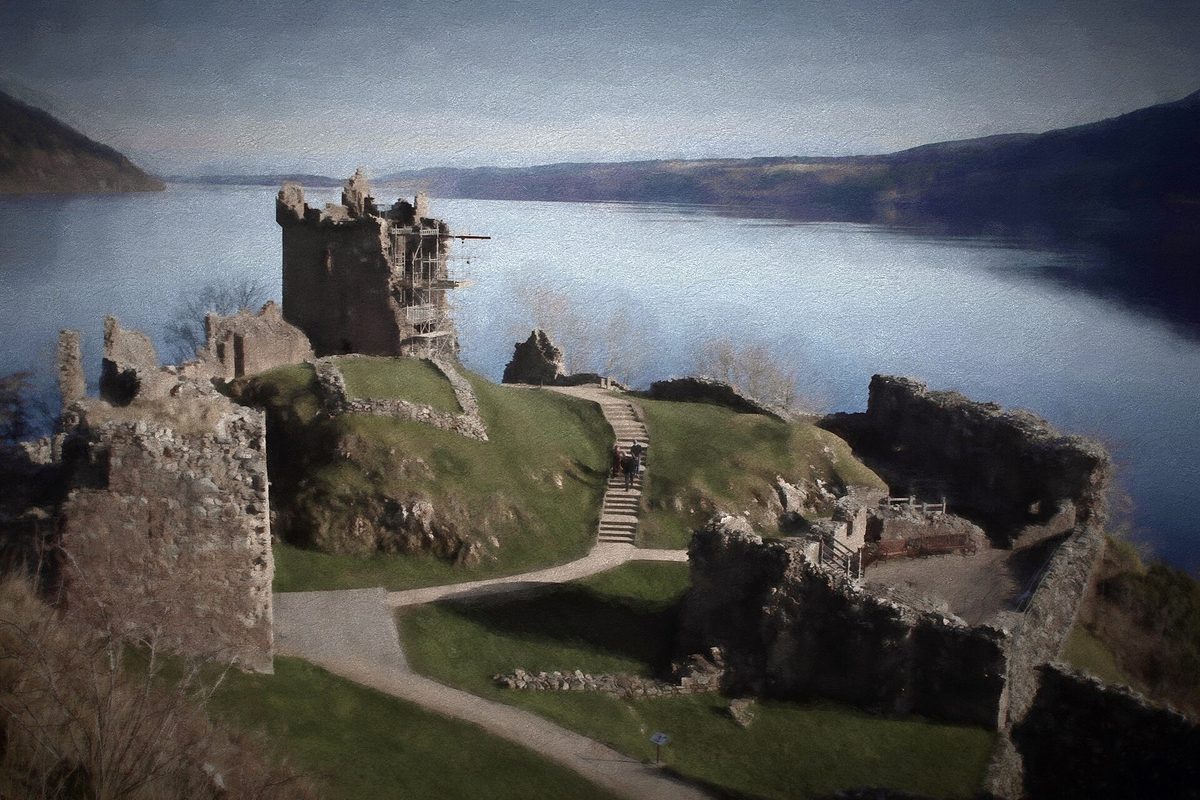
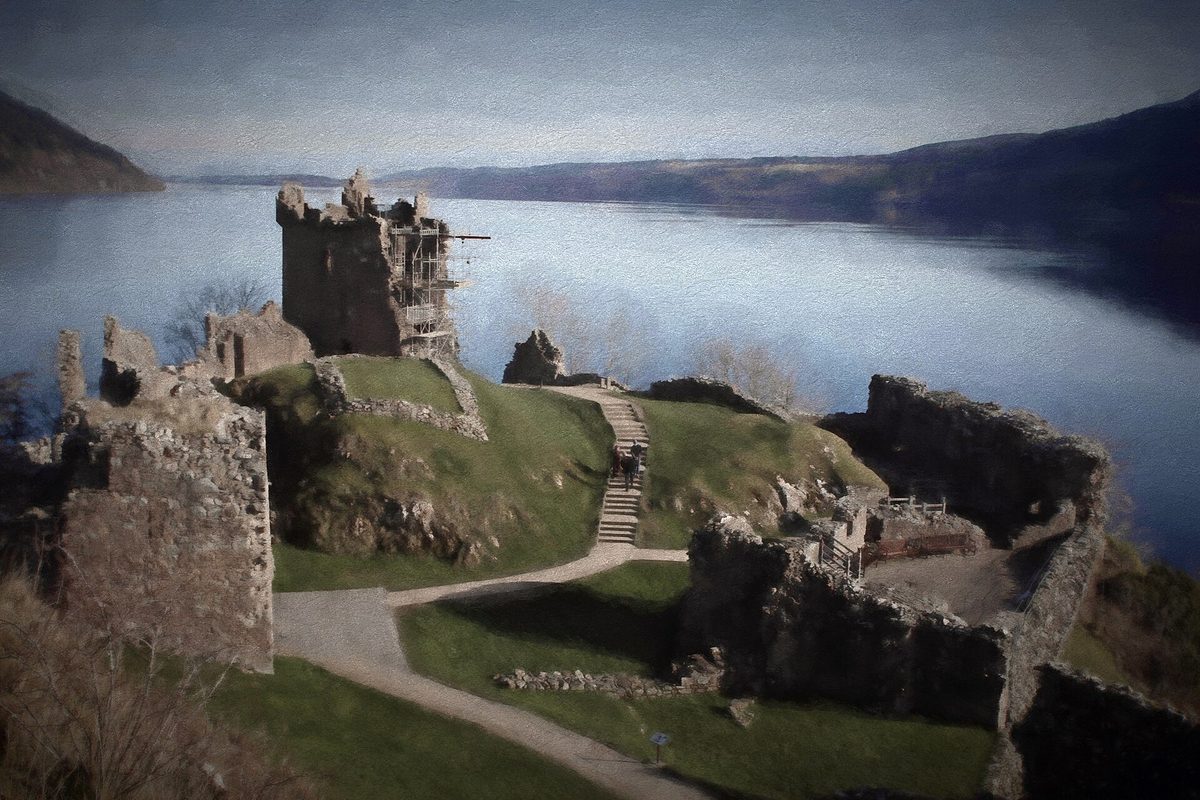
Urquhart Castle is the postcard, and unlike most postcards it earns it. The ruins sit on a promontory that pushes out into the loch. Historic Environment Scotland runs it; an adult ticket is £14 online or £16 in person, and parking is limited, with a space guaranteed only if you book it online.
What most visitors miss is that you can walk right down past the Grant Tower to the water’s edge and stand on the shingle with the loch at eye level. Do that. Our full Urquhart Castle guide covers tickets and timings, and the castle also earns its place among Scotland’s best castles on the strength of its setting alone.
Fort Augustus
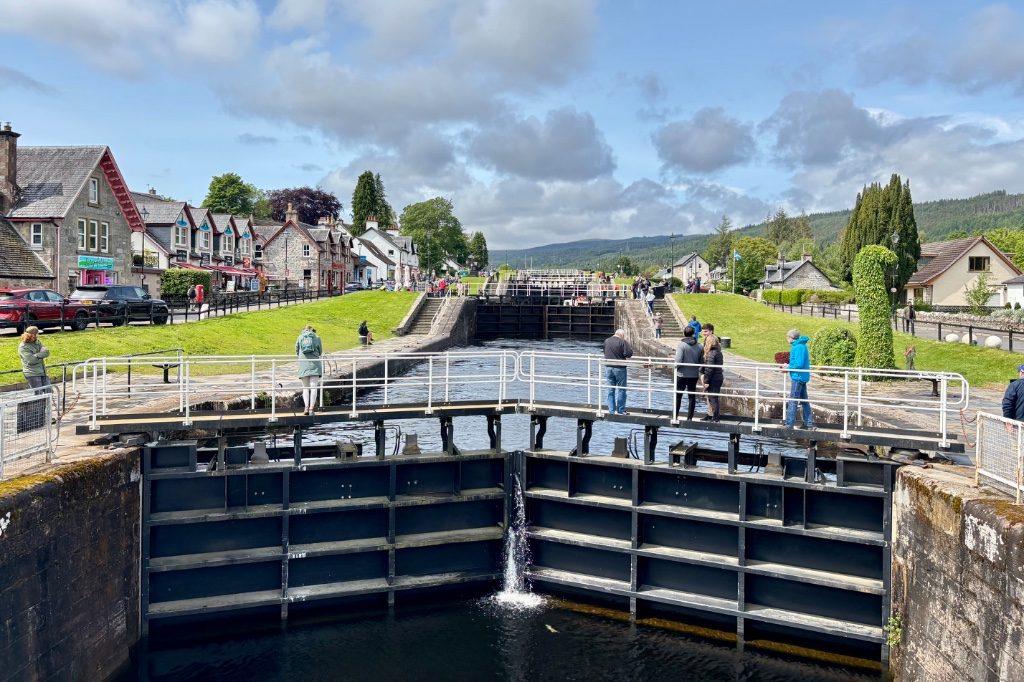
At the south-western head of the loch, Fort Augustus is where the Caledonian Canal steps down into Loch Ness through a staircase of five locks in the middle of the village. Watching a yacht work its way down while you have a coffee is a proper hour of entertainment, and it is free.
The pier at the bottom of the locks gives you an open view straight back up the loch — the reverse of the Dores view, and just as good. Allow around an hour from Inverness on the A82, or make it a natural stop if you are heading towards Fort William and Ben Nevis afterwards.
Falls of Foyers and the south loch road
The B862 and B852 along the south-east shore are what the A82 should be. This was General Wade’s military road, it is narrow and single-track in places, and it carries a fraction of the traffic. It also climbs high enough in places to give you the loch properly.
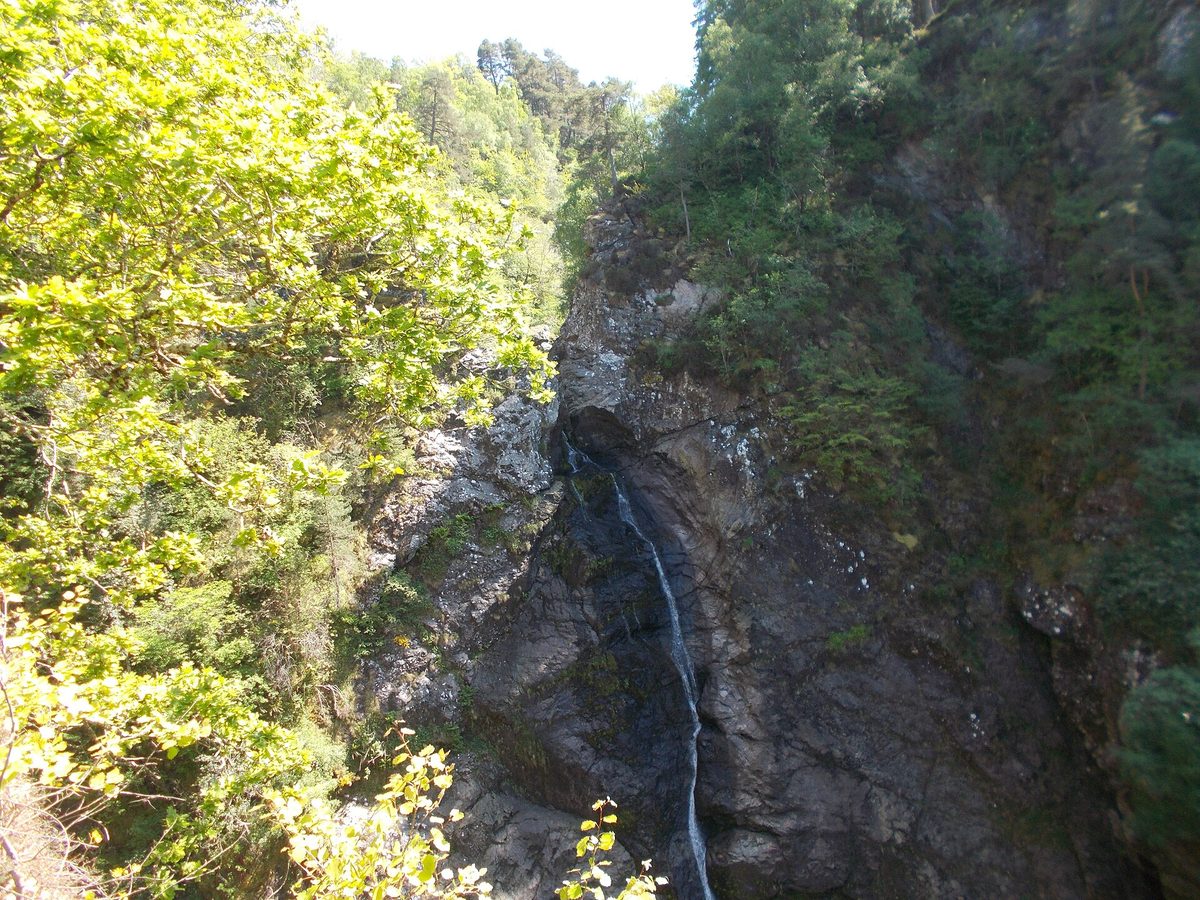
The Falls of Foyers is the set-piece: park in Foyers village and take the woodland path down through the gorge to the upper viewpoint, on steep steps that get slippery in the wet. Robert Burns wrote about this waterfall in 1787. Keep going downhill and the path eventually brings you out at the loch shore, which is a quiet, largely unvisited stretch of water.
Further along, the Suidhe Viewpoint near Whitebridge has roadside parking and a short pull up to a high moorland panorama. On the way back into Inverness the same road gives you Dores. That circuit — out on the A82, back on the B862 — is the best single day you can have here, and it slots neatly into a broader day trip from Inverness.
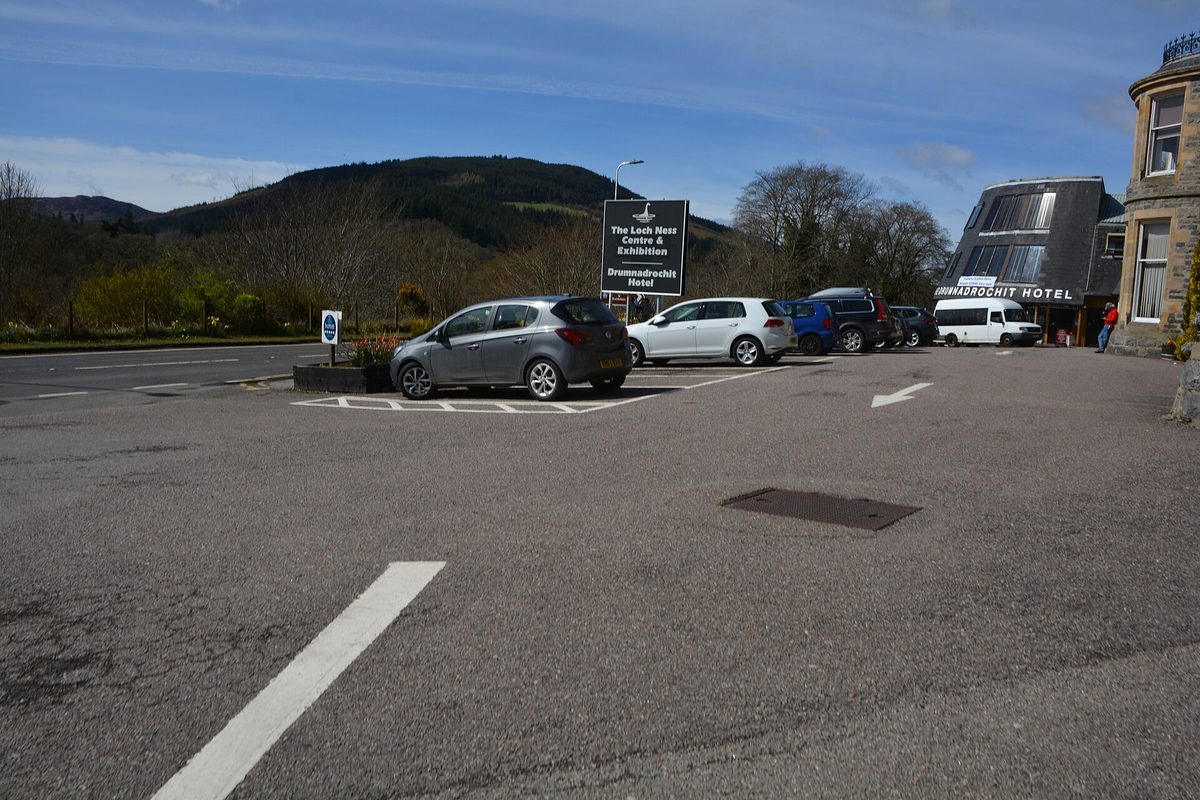
The Loch Ness Centre, Drumnadrochit
Drumnadrochit is the village that lives off the monster, and it has two competing attractions on the same short strip. The one worth your money is the Loch Ness Centre, which was substantially reworked in 2023 and now takes a genuinely scientific line: it walks you through the geology, the expeditions, the sonar work and the hoaxes without pretending. The one-hour Signature Tour is £15.75 for an adult booked online.
It is the right thing to do on a wet afternoon, and it is the right thing to do before you stand at the loch rather than after, because it gives you the chronology to hang the view on. Skip the gift-shop-led alternative next door unless you have children who want a plastic Nessie, in which case both will oblige.
Getting out onto the water
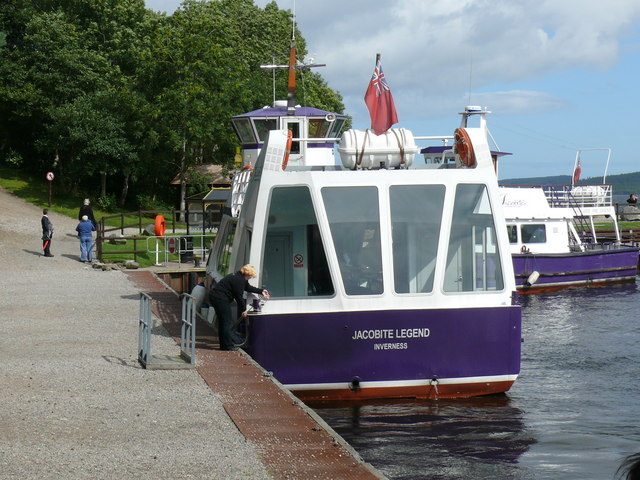
A cruise is the only way to feel the depth. Boats leave from Dochgarroch and Clansman Harbour near Inverness and from Fort Augustus at the other end, most of them with sonar screens running so you can watch the bed drop out from under you. Short sailings take around 50 minutes and start at about £21; Jacobite’s two-hour Contemplation cruise is from £29, and its 3½-hour Temptation package adds coach travel and a castle visit.
The combined ticket that lands you at Urquhart Castle by boat is the one I would pick, because arriving at the castle from the water is how it was meant to be seen and you skip the car park entirely. We compare operators, routes and prices in our guide to the best Loch Ness cruises.
Planning a Loch Ness day
How long you need
Half a day gets you Urquhart Castle and a look at the loch, and it will feel rushed. A full day lets you do the circuit properly: A82 south to Drumnadrochit and the castle, on to Fort Augustus for lunch and the locks, then back up the quiet side via Foyers and Dores, arriving at the beach for the evening light. That is roughly 80 miles of driving and about seven hours with stops.
Two days lets you add a walk. The Great Glen Way runs the length of the loch, and the Loch Ness 360 trail makes an 80-mile circuit of the whole thing for walkers and cyclists. If you are building a longer route, see how it fits into a wider Highlands road trip.
Getting there without a car
Inverness is the base for all of this — it has the train station, the airport and the bus network, and it is the obvious place to sleep. Our guide to Highland base towns makes the case for it in detail.
Scottish Citylink’s service 919 links Inverness with Fort William along the A82; check its current timetable for stops at Drumnadrochit, the castle and Fort Augustus before relying on it. The east-side road is very thinly served, so Dores and Foyers realistically need a car, a bike or a tour. A boat trip from Inverness is the best carless option of all, and there is more on travelling this way in our Scotland without a car itinerary and the practical guide to getting around Scotland.
What to book, and when
Book Urquhart Castle entry in advance between May and September — it uses timed slots and walk-ups get turned away on busy afternoons. Book cruises a few days ahead in summer, same day is usually fine in spring and autumn. The Loch Ness Centre rarely needs booking outside school holidays.
For the loch itself, the calm mornings that make the surface readable are more common in early autumn than in midsummer. September and October are my pick: fewer coaches, better light, the midges gone. Our month-by-month Scotland weather guide sets expectations, and if you are coming late in the year, Scotland in October goes into what is open and what has closed for the season.
What underwhelms, and the mistakes people make
Treating the A82 as the experience
I have said it already but it is the single most common error. Driving the road is not seeing the loch. If your entire Loch Ness plan is “drive along it”, you will get out of the car at the end wondering what the fuss was about.
Coming on a coach day trip from Edinburgh
These run, they are popular, and they are a long day for very little loch: Rabbie’s puts its Loch Ness day tours from Edinburgh at around 12 to 13 hours, with one to three hours in the Loch Ness area depending on the tour. If you want the Highlands on a tight schedule there are better uses of that day — our day trips from Edinburgh covers what works from there. Loch Ness deserves an overnight in Inverness.
Expecting the loch to be beautiful in the alpine sense
It is not Glencoe and it is not Skye. Loch Ness is long, dark, straight-sided and slightly forbidding, and its power is atmospheric rather than scenic. Visitors who arrive expecting drama sometimes leave flat. If it is mountain landscape you are after, weigh it against Glencoe before committing your day. We have also written a straight answer to the question in is Loch Ness worth visiting.
The middle of the day in July
In the middle of a summer day Drumnadrochit can be busy, and the castle car park only guarantees you a space if you have booked it online. When the crowds are out, neither the viewing nor the visiting is at its best. Shift your day to either end of it.
Doing only the monster
Half an hour up the road from Drumnadrochit is Culloden battlefield, which is a far heavier and more affecting place, and Inverness itself has a good afternoon in it — see things to do in Inverness. The monster is the hook, not the whole trip.
Frequently asked questions
Has the Loch Ness monster ever been proven real?
No. Not one specimen, body, bone or image has ever given conclusive evidence of a large unknown animal in Loch Ness. Sonar sweeps in 1987 and 2003, decades of camera watches and the 2018 environmental DNA survey have not demonstrated one either, though some sonar contacts remain ambiguous. The most famous photograph, the 1934 Surgeon’s Photograph, was later exposed as a model on a toy submarine.
What is the best place to see the Loch Ness monster?
Dores Beach, on the quiet east shore about 15 minutes from Inverness, gives one of the best views of Loch Ness, straight down the water from the shingle. The shore below Urquhart Castle, where the ruins push out into the loch, is the other classic spot. Both are better early or late in the day.
How deep is Loch Ness?
Around 230 metres at its deepest point, making it Scotland’s second-deepest loch after Loch Morar. It holds roughly 7.4 billion cubic metres of water, more than all the lakes in England and Wales combined. Peat suspended in the water stains it dark and keeps underwater visibility poor.
What did the 2018 DNA survey actually find?
A team led by Professor Neil Gemmell of the University of Otago sampled water throughout the loch and sequenced the DNA in it. There was no reptile DNA, ruling out a plesiosaur, and no shark, sturgeon or catfish. There was a great deal of European eel DNA, which keeps the “large eel” idea in play, although DNA cannot tell you how big the eels are.
When was the first Loch Ness monster sighting?
The modern era begins on 2 May 1933, when the Inverness Courier reported a sighting by Aldie Mackay and her husband. The often-quoted 565 AD account of St Columba is set in the River Ness, not the loch, and was written around 700 AD. The 1933 timing matters — road improvements along the north shore that year cleared trees and opened up views of the water.
Is Loch Ness worth visiting if you do not believe in Nessie?
Yes, and arguably more so. Urquhart Castle is one of the best-sited ruins in Scotland, the Caledonian Canal locks at Fort Augustus are a genuine engineering pleasure, the Falls of Foyers is a good short walk, and the loch itself is a serious landscape. Treat the monster as the reason you came and the Great Glen as what you actually get.
Can you visit Loch Ness with children?
Easily. The Loch Ness Centre is pitched well for ages roughly seven and up, cruises with sonar screens hold attention, and Urquhart Castle is a ruin children can climb around in. Distances between stops are short. Our guide to Scotland with kids has more on pacing a Highland day.
How long should you spend at Loch Ness?
One full day covers the loop properly: Urquhart Castle, Fort Augustus, the Falls of Foyers and Dores Beach, roughly 80 miles and seven hours with stops. Two days lets you add a section of the Great Glen Way or a longer cruise. Half a day is enough only for the castle and a quick look at the water.
Final thoughts
Take a flask down to Dores at either end of the day and you will, in all likelihood, see nothing at all. Do not expect to. But I would still tell you to go and stand there, because the value of Loch Ness has never really been the animal.
It is a story about an old road being upgraded, a newspaper editor picking one word over another, a humiliated hunter and his stepson with a toy submarine, and ninety years of people looking very hard at water that will not let them see. That is a better story than a monster, and you can only really feel it standing on the shingle with the black loch running away in front of you. Plan the rest of the trip around it with our Loch Ness and Inverness guide, and keep an eye on the surface.
About the author: This guide was written and is maintained by the ScotlandTourism.org editorial team — travel writers who’ve spent years exploring Scotland’s cities, Highlands and islands, from bagging Munros to chasing the perfect dram. We update our guides regularly to keep prices, opening details and advice current.
Last updated: October 2026. Prices and opening times change — always check the official site before you travel.
Photo credits
All images are used under their respective Creative Commons or public-domain licenses:
- The long dark expanse of Loch Ness seen from the shore in the Scottish — Ebgreene, CC0, via Wikimedia Commons
- The pebble shore at Dores Beach looking down the full length of Loch N — Mike Pennington, CC BY-SA 2.0, via Wikimedia Commons
- The staircase of locks on the Caledonian Canal at Fort Augustus — David Dixon, CC BY-SA 2.0, via Wikimedia Commons
- The Falls of Foyers waterfall dropping through the gorge above Loch Ne — Peter S, CC BY-SA 2.0, via Wikimedia Commons
- Urquhart Castle ruins on the promontory above Loch Ness near Drumnadro — BIG ALBERT, CC0, via Wikimedia Commons
- A cruise boat on Loch Ness — Susannah Muldoon, CC BY-SA 2.0, via Wikimedia Commons
- The River Ness flowing through Inverness — Daniel Kraft, CC BY-SA 3.0, via Wikimedia Commons
- The Loch Ness Centre and Exhibition sign at Drumnadrochit on the A82 — Lewis Clarke, CC BY-SA 2.0, via Wikimedia Commons
- A Nessie model at Loch Ness — Gary Rogers, CC BY-SA 2.0, via Wikimedia Commons